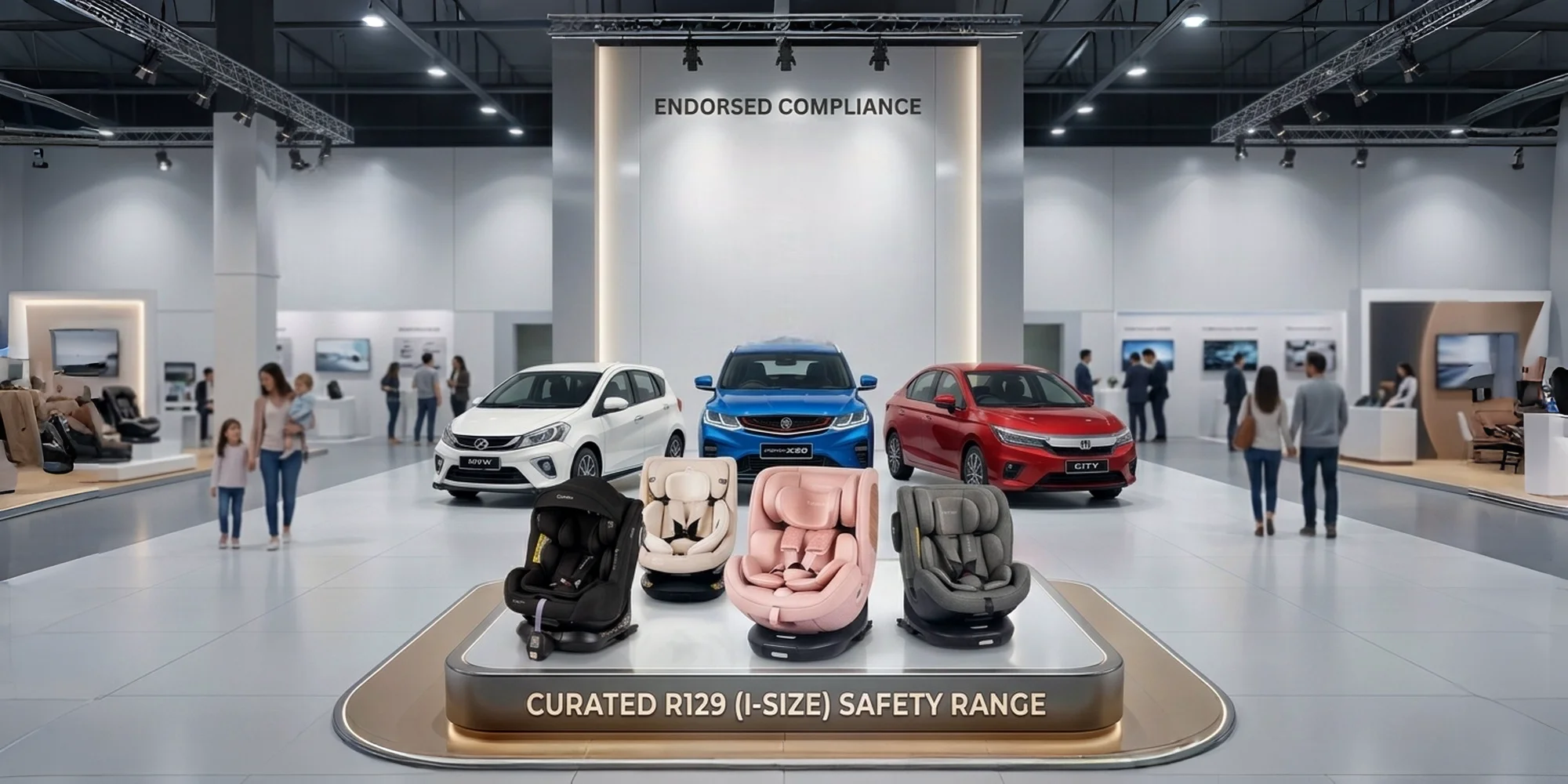
Car Seat Laws in Malaysia 2026 — Everything Parents Need to Know
Is a car seat compulsory in Malaysia? Yes — RM 300 fine since 2020. Children under 136 cm must use ECE R44/R129 certified CRS. Full law guide with FAQ.
Quick Answer:Yes, car seats are legally compulsory in Malaysia since 1 January 2020 under the Road Transport Act 1987 (Act 333) (Amendment 2019). All children under 136 cm in height or under 36 kg must use an approved Child Restraint System (CRS) in private vehicles. The fine is RM 300, with stricter enforcement being rolled out from 2025 onwards. Your car seat must carry ECE R44/04 or ECE R129 (i-Size) certification to be JPJ compliant.
- ~30% of Malaysian parents currently use a car seat (MIROS 2024)
- RM 300 fine for non-compliance under current enforcement
- 2020 — year the CRS law became mandatory in Malaysia
- R129 — latest i-Size standard recommended for new purchases
In this article
- What does Malaysian car seat law actually say?
- Who does the law apply to?
- What is the fine for not using a car seat?
- What makes a car seat legally compliant?
- Which type of seat does your child need?
- Is the law actually enforced in 2026?
- Are there any exceptions?
- MyCRS subsidy — can you get help buying a seat?
- Quinton Baby's JPJ-compliant car seats
- FAQ
1. What Does Malaysian Car Seat Law Actually Say?
The Child Restraint System (CRS) regulation in Malaysia is governed by the Road Transport Act 1987 (Act 333) — Motor Vehicles (Safety Seat-belts) (Amendment) Rules 2019, gazetted by JPJ (Jabatan Pengangkutan Jalan). It became mandatory for all private vehicles on 1 January 2020.
The law states that any child travelling in a private vehicle who meets the criteria below must be secured in an approved Child Restraint System at all times while the vehicle is in motion. This applies to every journey — including short trips to the kedai, school runs, and balik kampung drives.
Important: "Short trips are safe" is a myth. According to MIROS, the majority of serious child injuries in road accidents occur on roads within 10 km of the child's home — not on highways.
2. Who Does the Law Apply To?
Your child must use an approved car seat if they meet any one of these criteria:
- Height: Below 136 cm
- Weight: Below 36 kg
- Age: Below 12 years old
This means your child cannot simply "graduate" to an adult seatbelt because they've turned 7 or 8. They must meet the height and weight thresholds, not just an age. Most children do not reach 136 cm until around age 11–12, so the practical reality is that a car seat or booster is required throughout most of primary school.
Note: The law applies to private vehicles only. Public Service Vehicles (PSV) and Tourism Vehicles — including Grab, taxis, and buses — are currently exempt from providing CRS. If you travel with your child in an e-hailing vehicle, you should bring your own seat or pre-book a family-friendly service.
3. What Is the Fine for Not Using a Car Seat in Malaysia?
The standard fine for non-compliance with the CRS regulation is RM 300. Under the Road Transport Act 1987 (Act 333), serious or repeat offences can attract fines of up to RM 2,000 or imprisonment of up to one year.
Enforcement note: From 2025 onwards, JPJ has signalled a shift from pure education/advocacy toward active enforcement, following the expanded seatbelt mandate for all vehicle occupants. Enforcement officers — including police and JPJ personnel — are now being trained in CRS technical verification. Do not assume low enforcement means no enforcement.
More importantly: the real cost of not using a car seat has nothing to do with fines. According to MIROS, children secured in correctly installed car seats have significantly lower risk of fatal injury in a road crash. Malaysia's road fatality rate remains among the highest in Southeast Asia.
4. What Makes a Car Seat Legally Compliant in Malaysia?
Not every car seat sold in Malaysia is legally compliant. To be legal, a car seat must carry certification under one of these two international standards, as recognised by JPJ:
ECE R44/04 — The Older Standard
Still widely accepted in Malaysia. Look for an orange "E" label on the seat with a country number. Weight-based classification (Groups 0, 0+, I, II, III). This standard is being phased out globally but remains legal in Malaysia.
ECE R129 / i-Size — The Newer, Stronger Standard
More stringent than R44. Height-based classification, mandatory ISOFIX, extended rear-facing requirement, and more rigorous side-impact testing. If you are buying a new seat today, choose R129 (i-Size) certified. It is the direction Malaysian safety standards are heading.
Illegal car seats: Car seats without ECE R44 or R129 certification — including many cheap unbranded seats sold on Shopee and Lazada — are not legally compliant and may provide no real crash protection. Always check for the certification label before purchase.
How to check if a car seat is JPJ-approved
JPJ maintains an official list of approved CRS models on their portal at www.jpj.gov.my. You can search by brand and model to confirm compliance. All Quinton Baby car seats appear on this list — we submit every model for JPJ compliance review and KBA Germany testing before it reaches Malaysian customers.
5. Which Type of Car Seat Does Your Child Need?
Malaysian law specifies the appropriate seat type based on your child's weight. Here is a clear breakdown:
- 0–13 kg (Newborn to ~1 yr): Infant carrier / Group 0+, rear-facing only — Quinton Picco i-Size
- 0–18 kg (Newborn to ~4 yrs): Convertible seat, rear then forward, rear-facing preferred to 18 kg — Quinton i-Smart 360 or SpinGuard 360
- 9–25 kg (~1 to ~7 yrs): Forward-facing with harness — Quinton OneSpin+ 360
- 15–36 kg (~4 to ~12 yrs): Booster / high-back booster, forward-facing with adult belt — Quinton Maple 360 (booster stage)
Rear-facing is safer for longer. The i-Size standard requires rear-facing until at least 15 months (or 105 cm). MIROS and international safety bodies recommend rear-facing as long as possible — ideally until your child reaches the maximum weight for rear-facing on their specific seat. All Quinton 360° i-Size seats support extended rear-facing up to 105 cm or 18 kg.
6. Is the Car Seat Law Actually Enforced in 2026?
This is the question every parent asks. The honest answer: enforcement is strengthening.
When the law was first implemented in January 2020, JPJ took an education-first approach — roadblocks focused on awareness rather than summonses. According to MIROS data published in early 2026, CRS usage in Malaysia remains at approximately 30% — meaning 7 out of 10 children in private vehicles are still unprotected.
That statistic has drawn significant public and media attention. JPJ's new "Klik Sebelum Gerak" campaign, expanded seatbelt enforcement for bus passengers from July 2025, and the training of over 1,000 enforcement officers in CRS technical verification all signal that passive tolerance of non-compliance is ending.
Our advice: Do not wait for a summons to motivate you. The law has been in force since 2020. Enforcement is tightening. More importantly — a RM 300 fine is nothing compared to the cost of a child injury in a crash that a car seat could have prevented.
7. Are There Any Exceptions to the Car Seat Law?
JPJ recognises a limited number of exceptions under which CRS use is not required:
- Vehicle not designed for CRS use — If your vehicle does not have a 3-point seatbelt or ISOFIX and physically cannot accommodate a CRS, an exemption may apply. This is rare in modern vehicles.
- Number of passengers prevents proper use — If your vehicle is full and there is no safe way to install a CRS without improperly using it, an exception may apply. This is not a blanket excuse for not owning a seat.
- Medical certification — Children with certain disabilities or medical conditions (e.g. autism with severe sensory issues) may be exempted with a certificate from a qualified medical practitioner.
- Public Service or Tourism Vehicles — PSV and Tourism Vehicles (taxis, e-hailing, buses) are currently exempt from providing CRS. However, this does not prevent you from bringing your own seat on board.
8. MyCRS Subsidy — Can You Get Help Buying a Car Seat?
Yes. The MyCRS programme, implemented by MIROS and the Ministry of Transport in 2022 and 2023, offered a 50% subsidy on CRS purchases for B40 and M40 households. This programme was designed specifically to address the cost barrier identified by MIROS research — where many low-income families cited price as their primary reason for not owning a car seat.
Check the official MIROS and Ministry of Transport websites for the current status of subsidy programmes, as availability and eligibility criteria may be updated periodically.
9. Quinton Baby's JPJ-Compliant Car Seats — All Legal, All Certified
Every Quinton Baby car seat is JPJ compliant, KBA Germany tested, and reviewed by our in-house MIROS-certified safety expert Jeff Loi (COSI) before it reaches Malaysian families. Here is our full range with certifications:
Quinton Silver — ECE R44 Our most affordable legally compliant seat. Birth to 36 kg, ISOFIX installation, side-impact protection.
Quinton Picco i-Size — R129 i-Size Infant carrier for newborns. R129 i-Size certified. Lightweight, click-in/out design.
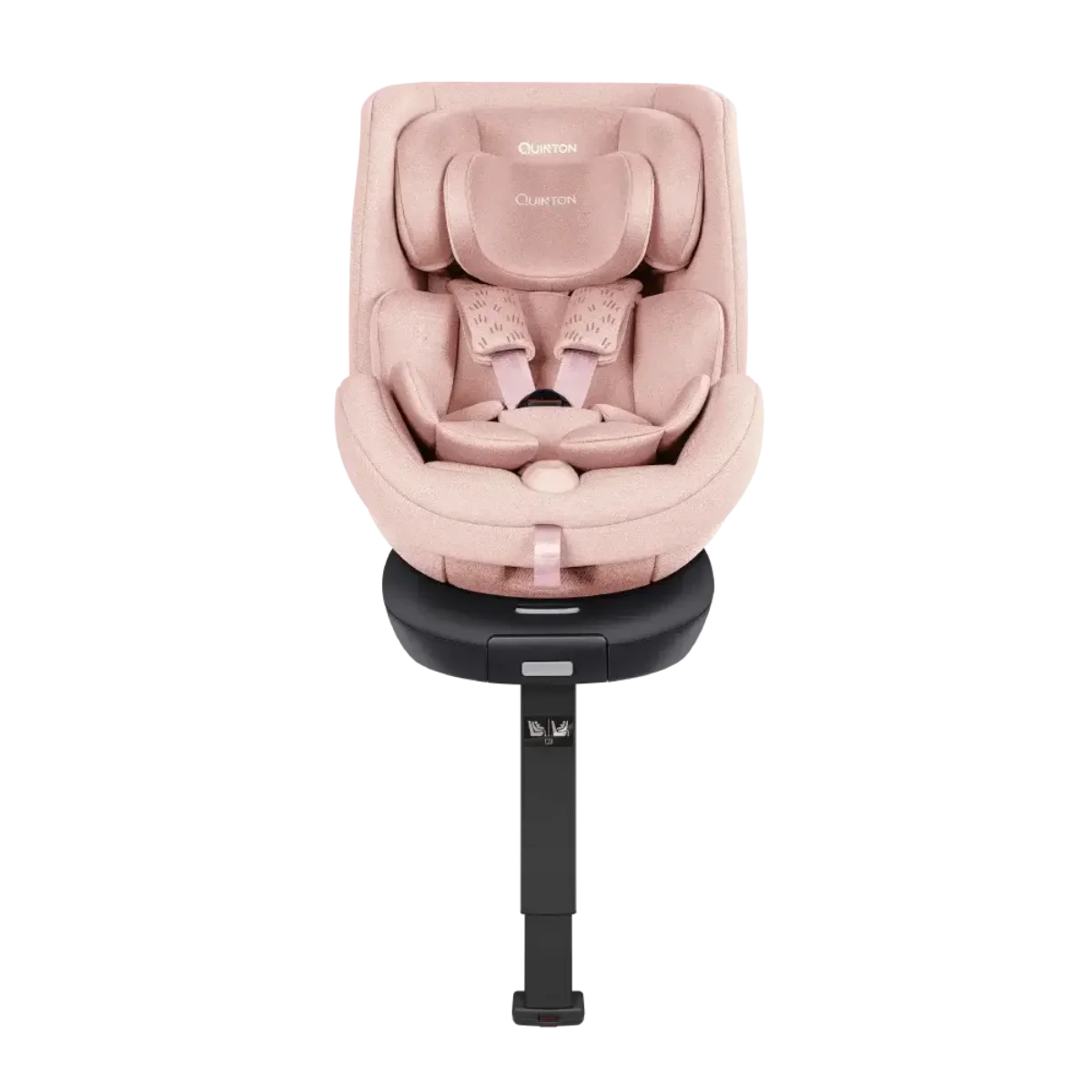
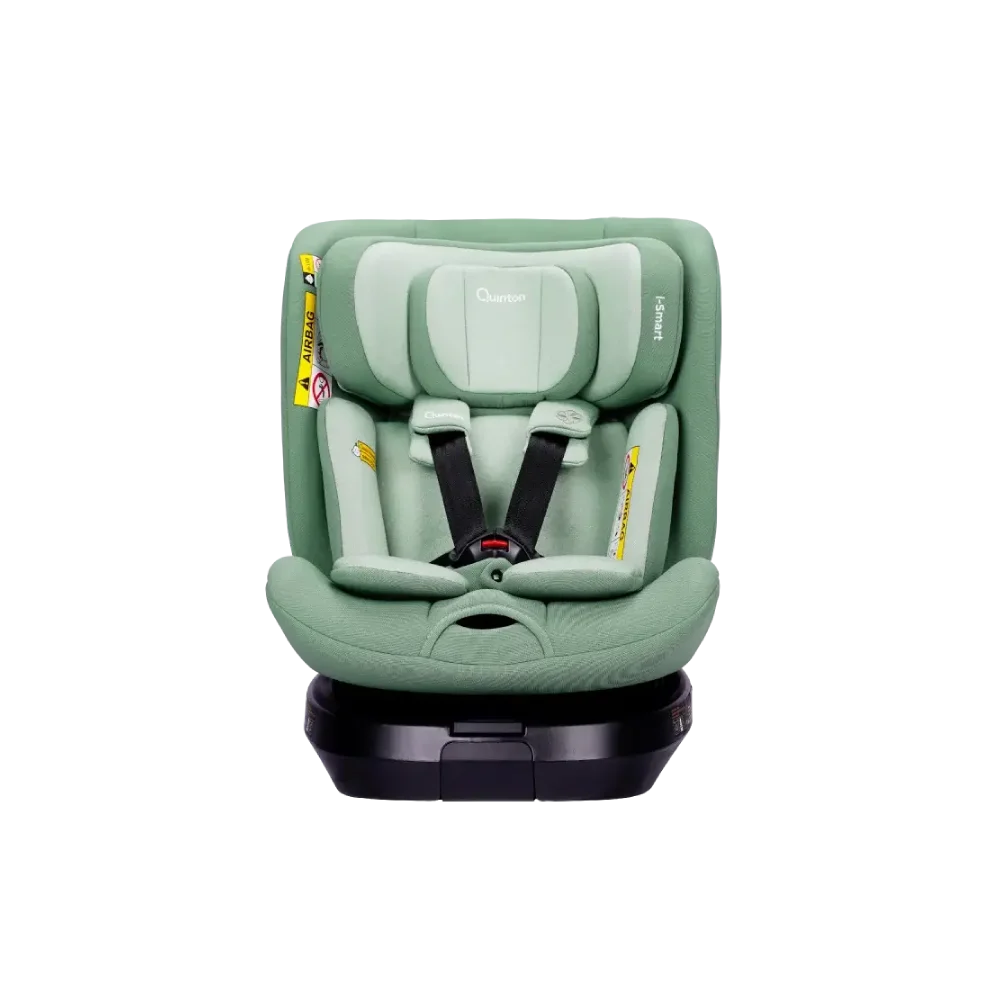
Quinton i-Smart 360 i-Size — R129/03 i-Size 360° rotation, Q-MAX breathable fabric, extended rear-facing to 105 cm. Ideal for Malaysia's heat.
Quinton OneSpin+ 360 — ECE R44 Dual ISOFIX + seatbelt installation. 360° rotation, Q-MAX fabric. Birth to 36 kg.
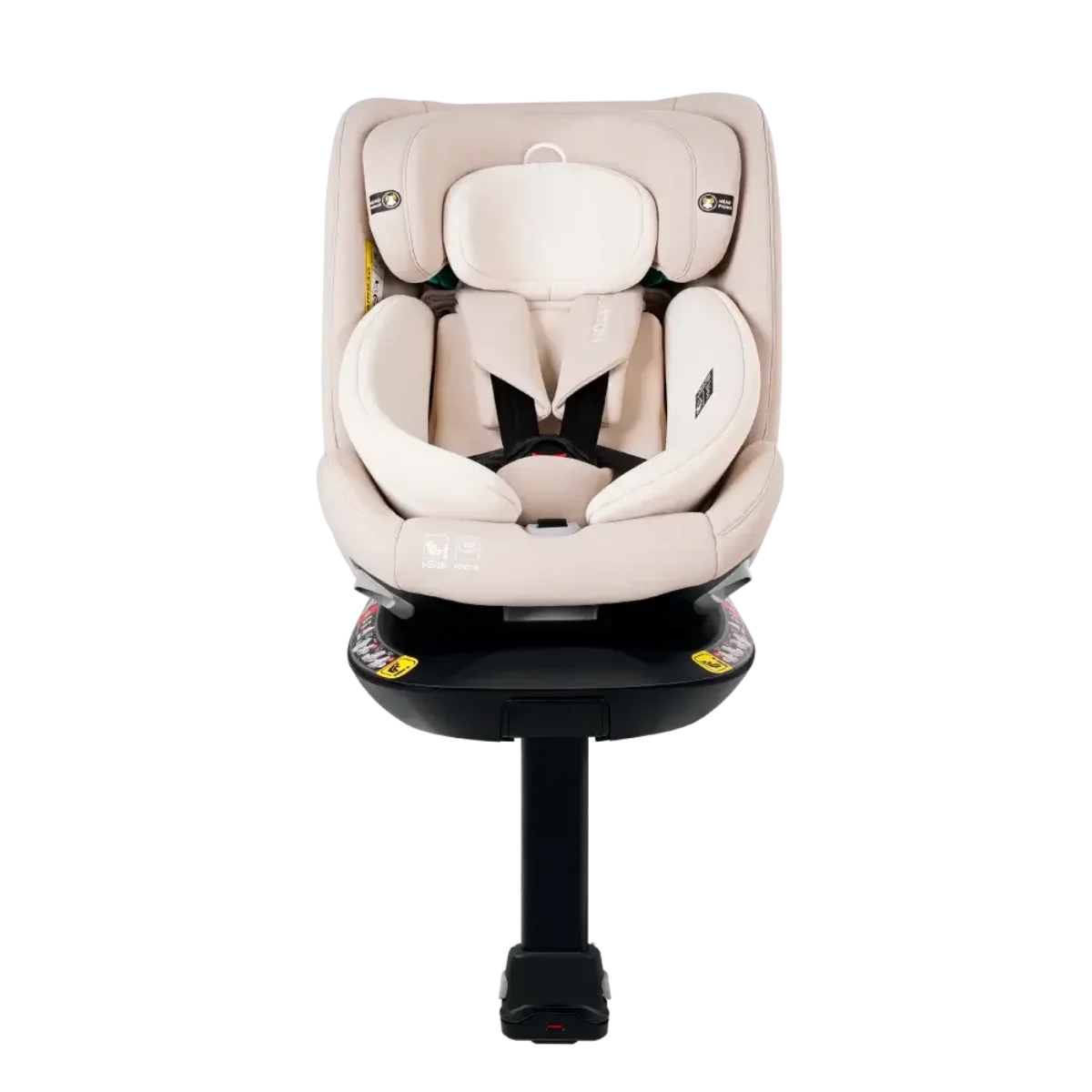
Quinton SpinGuard 360 i-Size — R129/04 i-Size ⭐ Best Seller Latest R129/04 standard. 360° dual-side rotation, Wormshell design, SoftTouch memory foam, 175° recline. Birth to 12 years.
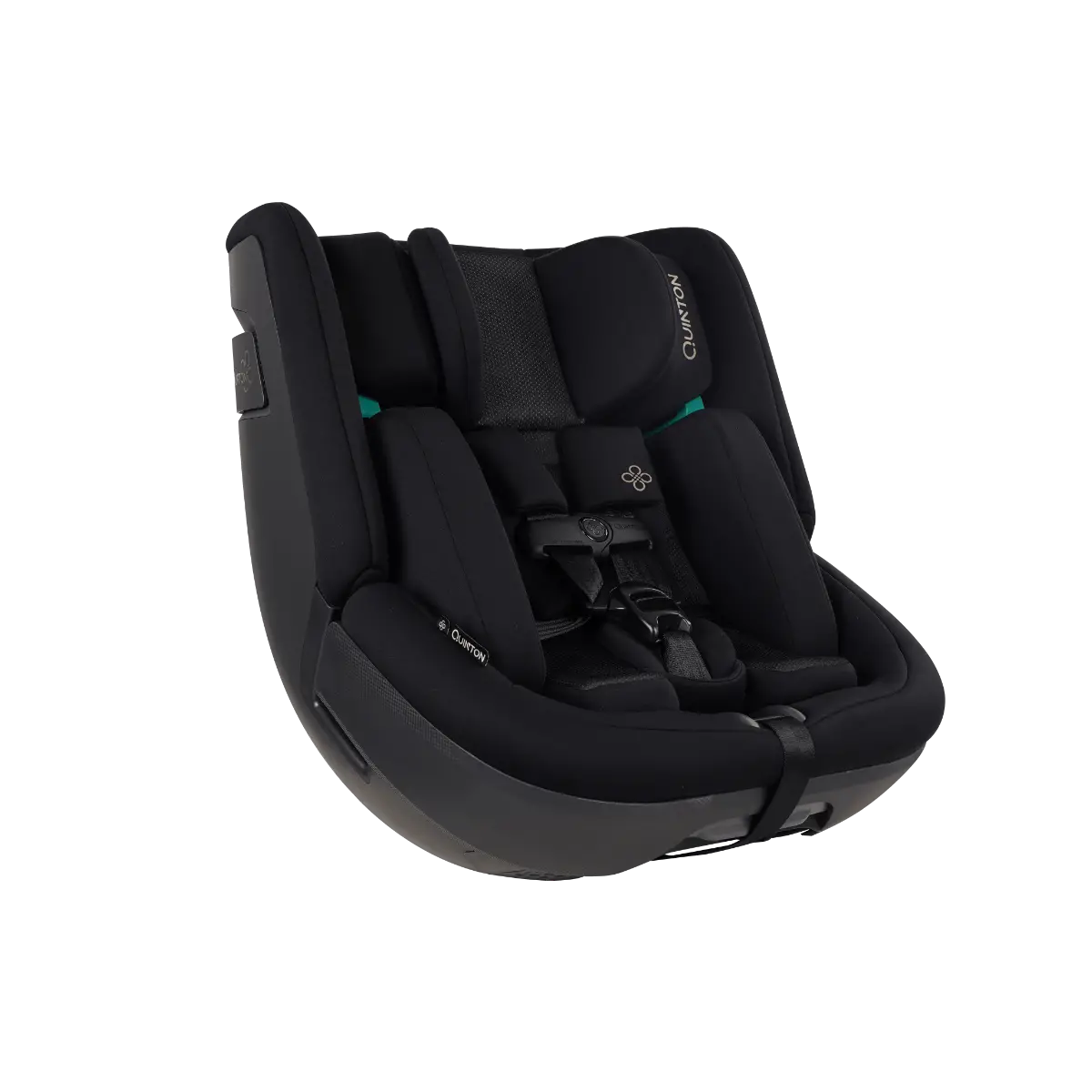
Quinton Maple 360 i-Size — R129/03 i-Size Flagship. Egg Bounce Technology, R129/03 i-Size, 360° rotation. The best crash energy management in our range.
All Quinton Baby Car Seats Are JPJ Compliant
KBA Germany tested · MIROS-certified safety expert reviewed · R129 i-Size certified range · Free delivery across Malaysia · 1-to-1 Safe Car Seat Programme included
Last updated April 2026. Information sourced from JPJ (jpj.gov.my), MIROS (miros.gov.my), and the Malaysian Ministry of Transport (mot.gov.my). Laws are subject to amendment — always verify with official government sources for the latest regulations. This article does not constitute legal advice.
FAQ
Frequently Asked Questions
Is a car seat compulsory in Malaysia?
What is the fine for not using a car seat in Malaysia in 2026?
Until what age does a child need a car seat in Malaysia?
Can I use a second-hand car seat in Malaysia?
The seat has never been in a crash
All parts are intact
The seat has not expired (most have a 6–10 year lifespan from manufacture)
The certification label is still present and legible
Quinton Baby's Safe Car Seat Programme — included with every Quinton seat purchase — provides a 1-to-1 replacement if your seat is in an accident, reducing the temptation to reuse a compromised seat.