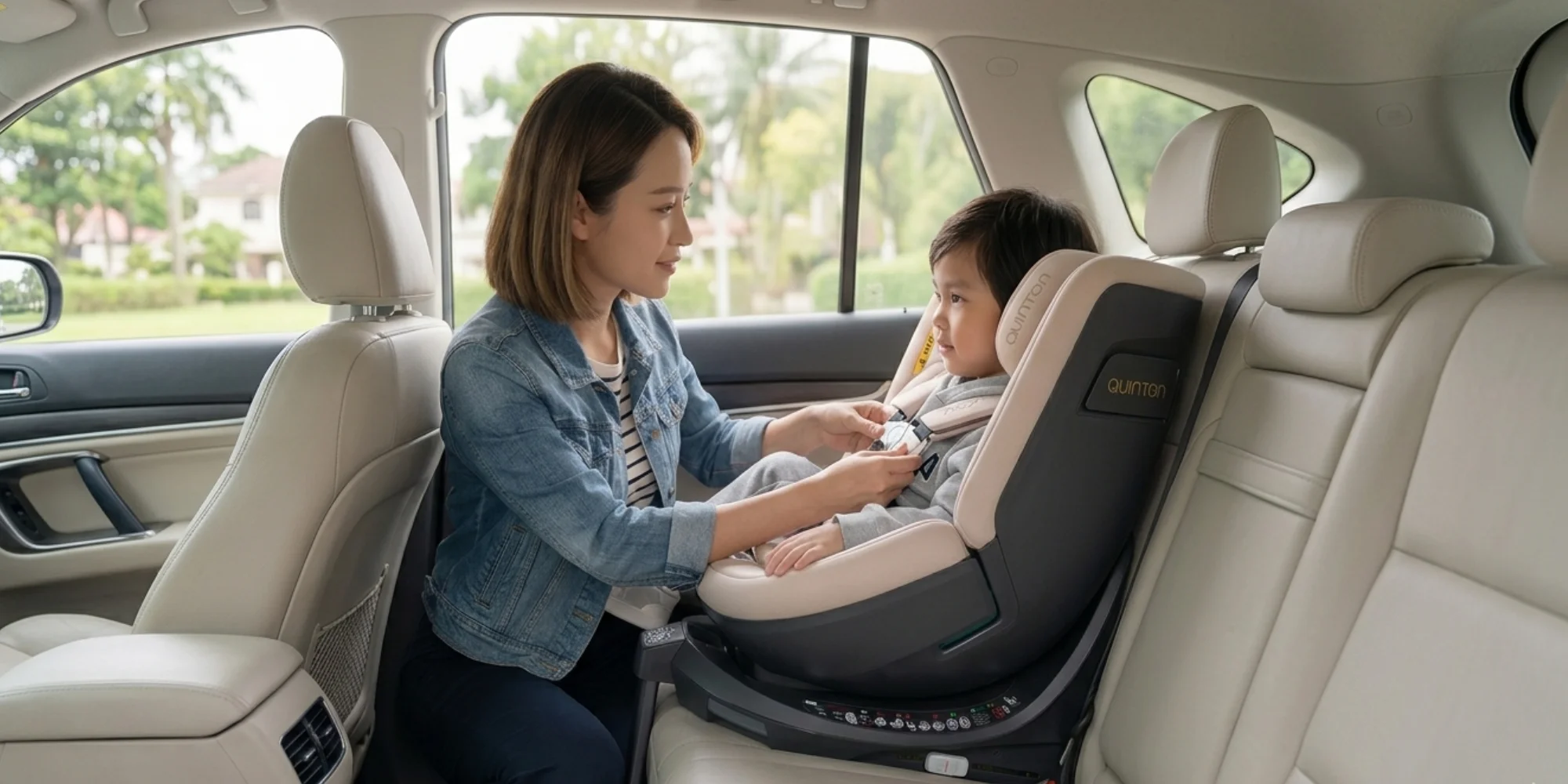
Rear-Facing vs Forward-Facing Car Seat: When Should Malaysian Parents Switch?
Wondering when to switch your rear-facing car seat in Malaysia? Here's the real criteria every parent needs to know before making the change.
Quick Answer
The rear-facing vs forward-facing question is one every Malaysian parent asks. The answer is simple: keep your child rear-facing for as long as possible, until they hit the maximum rear-facing weight or height limit on their specific seat. For most Quinton i-Size seats, that is ≤ 15 months or 105 cm / 18 KG (refer to the manual handbook). The only valid reason to go forward-facing is when your child genuinely outgrows the rear-facing limit on their seat.
Why Rear-Facing Is Safer: The Science in Plain English
In a frontal crash, which accounts for the majority of serious road accidents in Malaysia, a rear-facing seat spreads the impact force across your child's entire back, head, and neck. The seat shell absorbs the crash energy. Your child moves with the seat.
In a forward-facing seat, the same crash throws your child's body forward while the harness holds them back. All that force concentrates on the harness straps across the chest, shoulders, and neck. For a toddler whose spine and neck are still developing, that difference is significant.
Research consistently shows rear-facing is up to 5 times safer than forward-facing for children under 2 in a frontal collision. Malaysian roads, with their mix of highway driving, sudden braking, and frequent minor collisions, make this especially relevant for every family.
The Biggest Myth Malaysian Parents Believe
Most Malaysian parents switch from rear-facing to forward-facing for the wrong reason. The most common one:
"My baby's legs are touching the front seat. It's time to switch."
This is not a safety concern at all. Children are naturally flexible. Legs touching, bending, or crossing in a rear-facing seat is completely normal and comfortable for them. There is no medical or safety reason related to leg position that requires switching. A bent knee is not a broken leg risk. Staying rear-facing, however, significantly reduces the risk of head and neck injury in a crash.
Other myths, busted:
| Myth | Reality |
| "My baby looks uncomfortable rear-facing" | Children adapt quickly. What looks awkward to adults is normal to them. |
| "My baby cries more rear-facing" | Usually unrelated to seat direction. Check harness fit and recline angle instead. |
| "Rear-facing hurts their neck in a crash" | The opposite is true. Rear-facing protects the neck. |
When to Actually Switch: The Real Criteria
When should you switch from rear-facing to forward-facing?
The answer isn’t based on age, leg length, or pressure from others , it should always follow the car seat manual.
For most of the Quinton i-Size seats:
✅ Rear-facing is required for babies ≤15 months old
✅ or rear-facing until 105 cm / 18 kg (based on the manual handbook)
Which Quinton Seats Support Extended Rear-Facing?
All Quinton 360° i-Size seats support extended rear-facing. Here is the full breakdown:
| Seat | Rear-Facing Limit | Forward-Facing | Grows To |
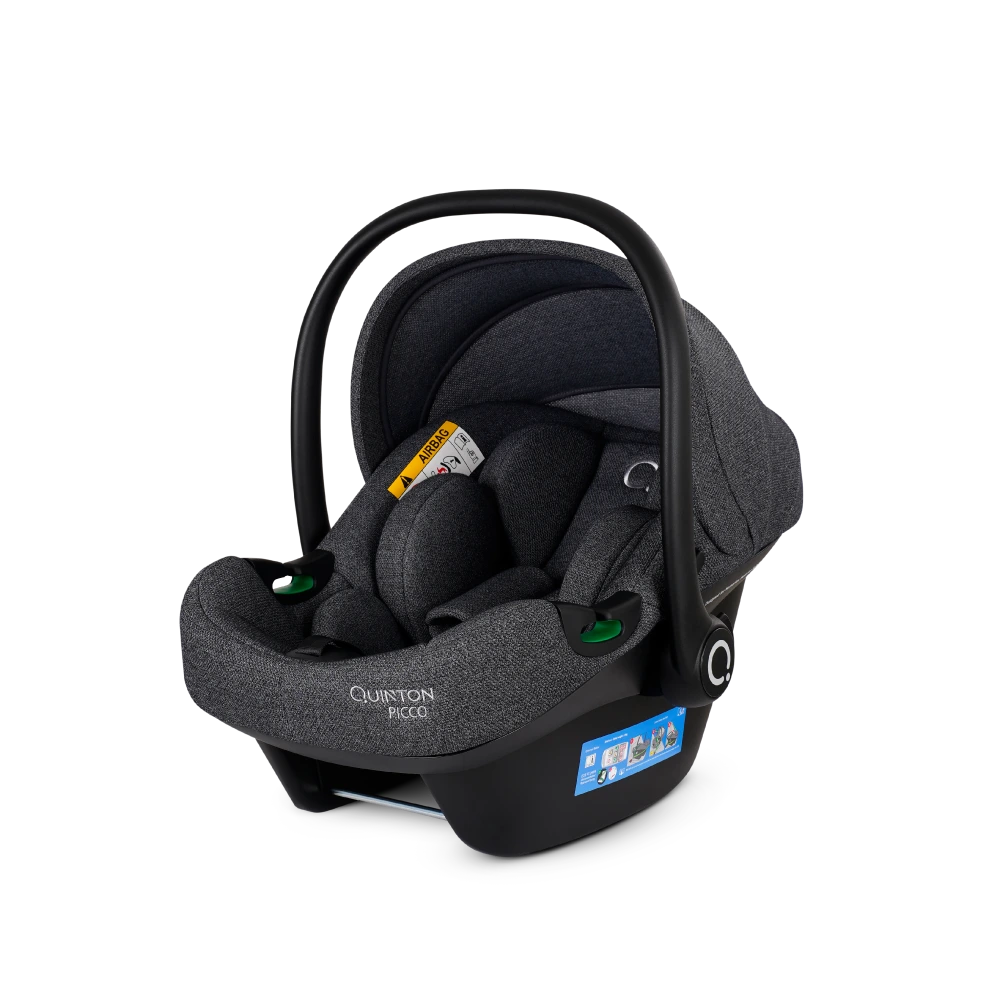
| Picco i-Size | 87 cm / 13 kg | Infant carrier only | Birth to 13 kg |
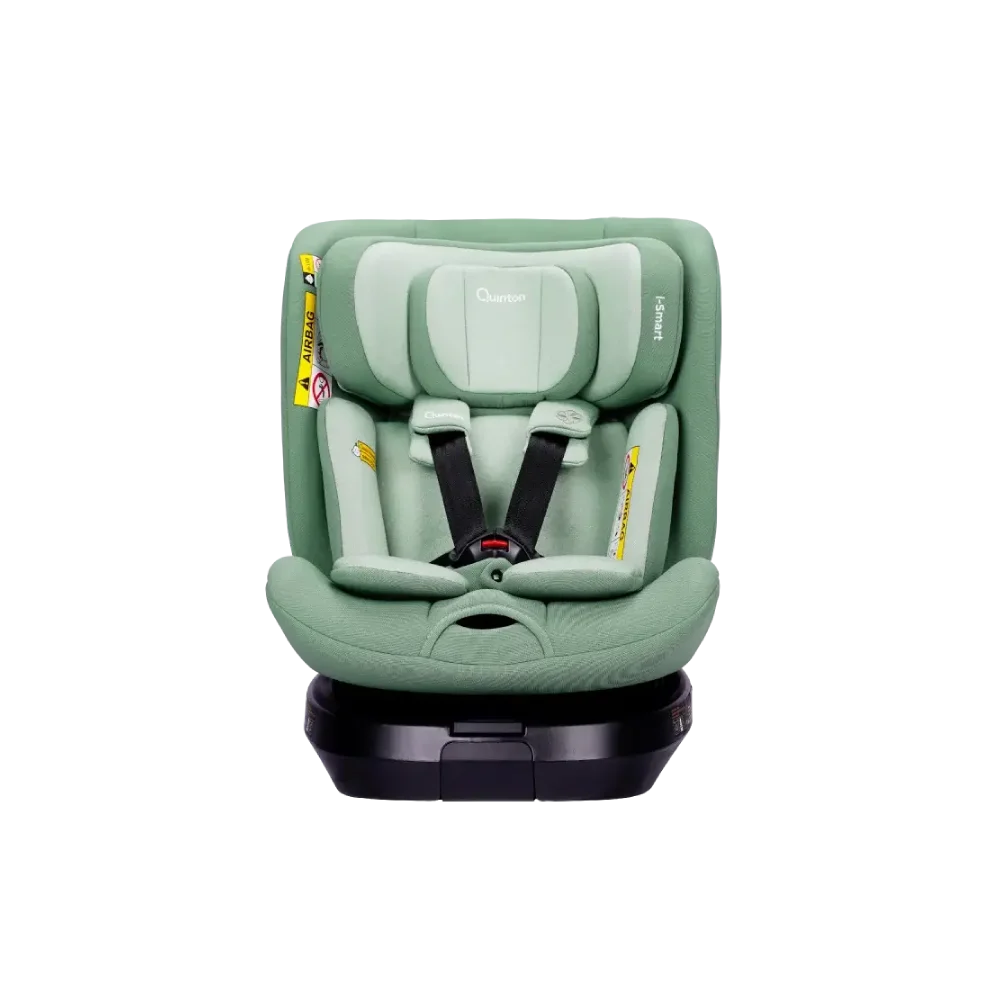
| i-Smart 360 | 105 cm / 18 kg | Up to 150 cm | Birth to 12 years |
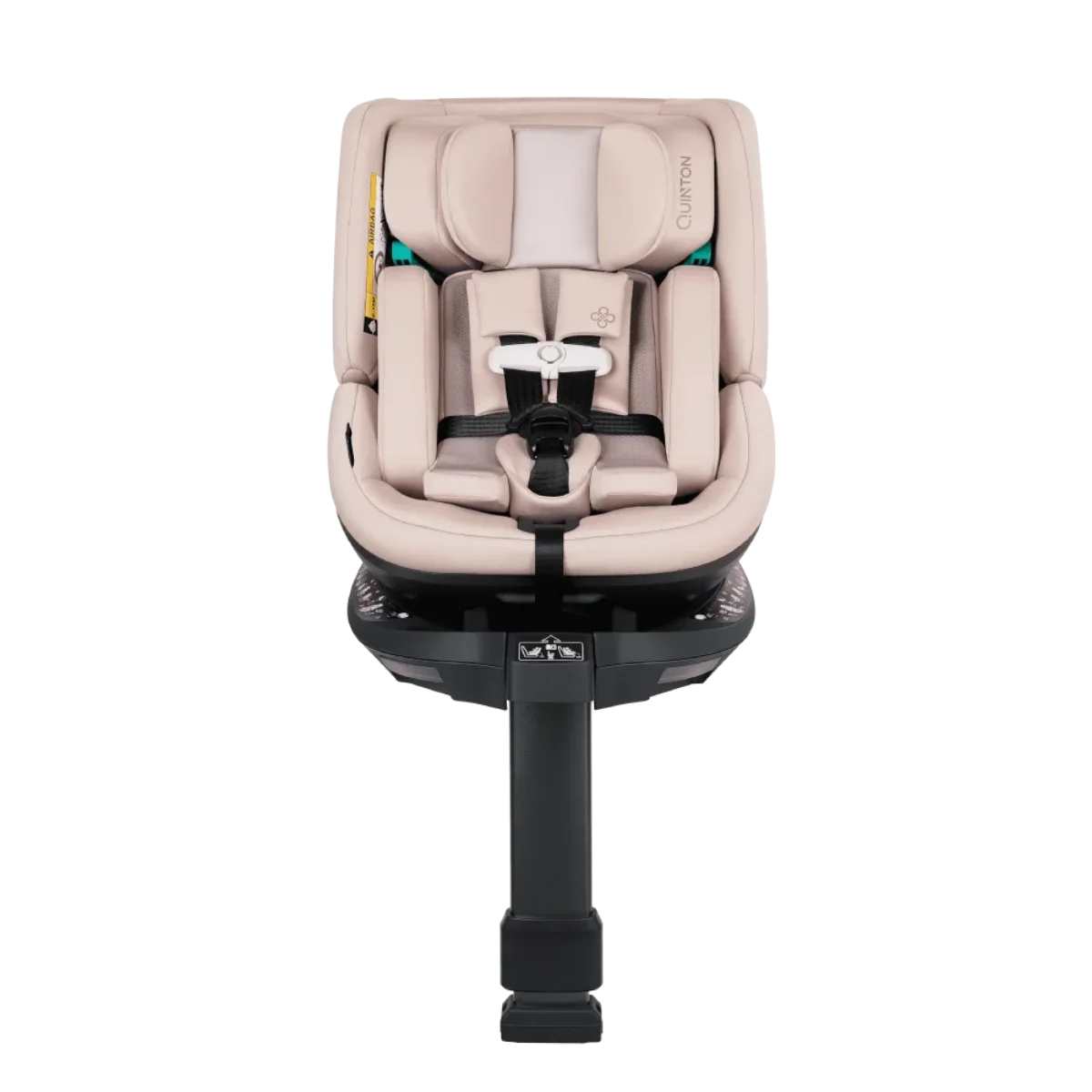
| SpinGuard 360 | 105 cm / 18 kg | Up to 150 cm | 40 cm to 150 cm |
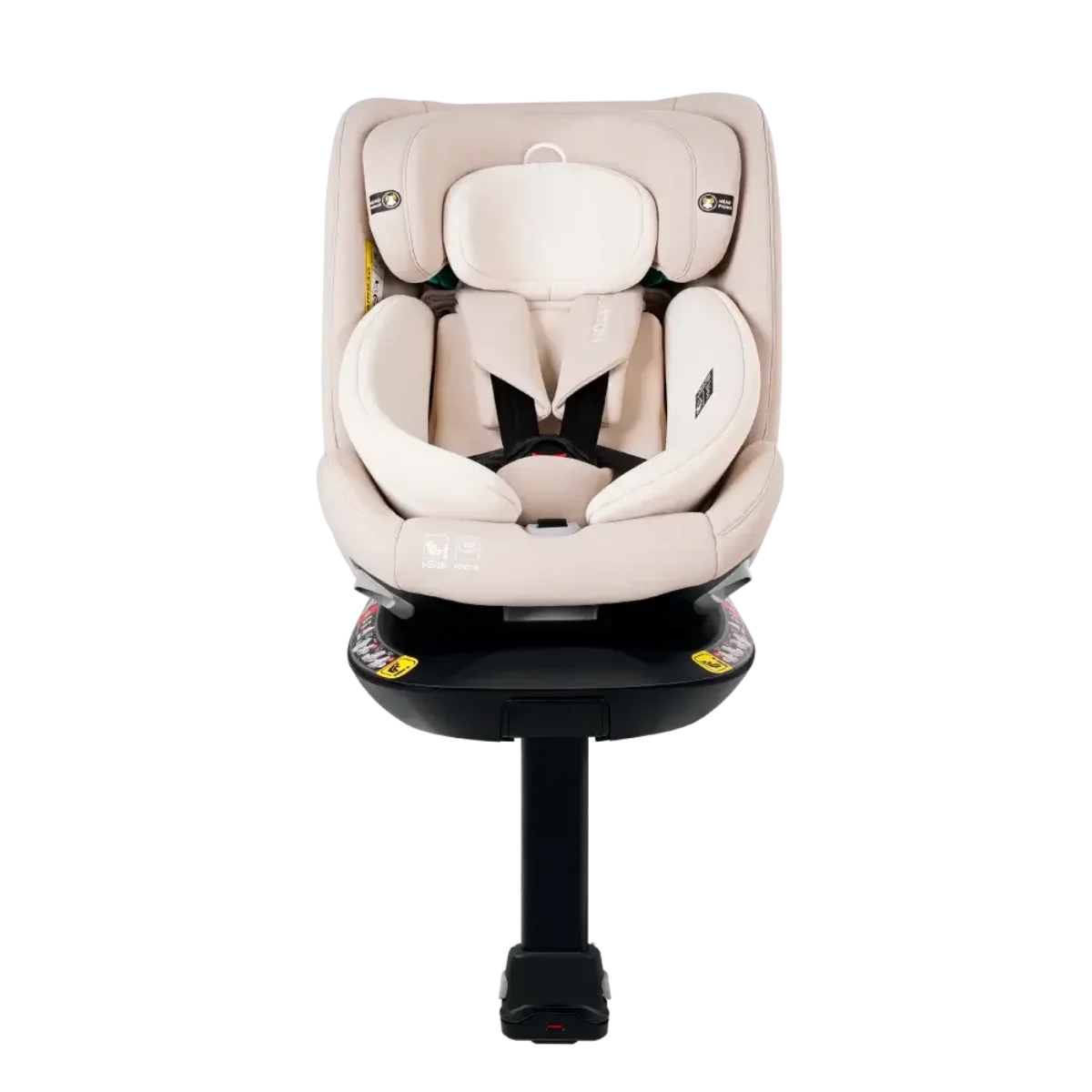
| Maple 360 | 105 cm / 18 kg | Up to 150 cm | Birth to 12 years |
| Wowo 360 | 105 cm / 18 kg | Up to 150 cm | Birth to 12 years |
| OneSpin+ 360 | 18 kg | Up to 36 kg | Birth to 36 kg |
Rear-Facing Checklist
Before every journey in rear-facing mode, confirm:
- Harness straps through slots at or below the shoulders
- Harness snug, cannot pinch at collarbone
- Correct recline angle, head does not flop forward
- ISOFIX double-clicked, support leg firmly on floor
- Child has not exceeded rear-facing height or weight limit
FAQ